Can Trauma Cause Relationship Problems?
You can love your partner deeply and still feel on edge when they get quiet, defensive when they ask a simple question, or numb when they want closeness.
If you have ever wondered, can trauma cause relationship problems, the short answer is yes. Not because you are too much, too sensitive, or bad at relationships, but because trauma can teach your nervous system that connection is risky.
That can show up in ways that are easy to miss at first. You might overthink every text, shut down during conflict, people-please to keep the peace, or feel intense panic when there is even a small hint of distance.
From the outside, it may look like communication problems. Underneath, it is often a body and brain trying to protect you.
How Trauma Affects Relationships
Trauma does not only live in memory.
It can live in your body, your expectations, and the meaning you make out of everyday moments.
If your past taught you that love comes with unpredictability, criticism, abandonment, betrayal, or emotional neglect, your nervous system may stay alert for those patterns even when your current relationship is different.
This is one reason trauma can create relationship stress that feels confusing.
A delayed reply might not just feel annoying. It might feel like danger. A partner asking for space might not just feel disappointing. It might trigger an emotional flashback: a wave of shame, panic, or anger that seems bigger than the moment itself.
For many women, especially those who are high-functioning on the outside, these reactions can turn inward. Instead of saying, "I feel scared," you may think, "I am needy," or "Why am I like this?"
That self-blame can become part of the cycle. You are not broken. Your patterns make sense in context.

Can Trauma Cause Relationship Problems Even in Healthy Partnerships?
Yes. A caring partner can reduce harm, but they cannot erase a trauma response by being patient enough or loving enough. If your body has learned to expect hurt, it may still react as if hurt is coming.
This is where a lot of couples get stuck. One person is trying to reassure. The other person still feels activated. Then both people start to feel helpless.
The partner offering reassurance may think, "Nothing I do helps." The partner with trauma may think, "What is wrong with me?"
Neither of those beliefs is the real issue. The issue is that trauma responses often happen faster than conscious thought. By the time you are trying to talk yourself down, your system may already be in fight, flight, freeze, fawn, or collapse.
In relationships, that can look like irritability, withdrawing, emotional numbness, clinginess, perfectionism, sexual shutdown, difficulty trusting, or needing constant reassurance.
It can also look like starting arguments when you actually need comfort, because conflict feels more familiar than vulnerable honesty.

Common Trauma Patterns That Affect Connection
Trauma responses are protective. They developed for a reason. But in adult relationships, the same strategies that once helped you survive may now create disconnection.
One common pattern is hypervigilance. You scan for changes in tone, facial expression, or energy and quickly assume something is wrong. This can leave you exhausted and make your relationship feel emotionally unsafe, even during neutral moments.
Another is shutdown. When conflict starts, your mind may go blank. You cannot find your words, your body feels heavy, and you want to escape the conversation. Partners often misread this as not caring, when in reality your system may be overwhelmed.
People-pleasing is another trauma adaptation that can quietly damage intimacy. If you learned that your needs led to criticism or rejection, you may become very good at anticipating everyone else while losing touch with yourself. Over time, resentment builds because the relationship looks close on the surface but does not feel mutual.
Trauma can also make boundaries confusing. Some people become extremely guarded and struggle to let anyone in. Others feel compelled to overexplain, over-give, or stay in relationships that do not feel good because disconnection feels unbearable.
For neurodivergent women and couples, these dynamics can be even more layered.
Sensory overload, rejection sensitivity, emotional intensity, or difficulty shifting out of overwhelm can all interact with trauma in ways that traditional relationship advice misses.
What looks like overreacting may actually be a nervous system under strain.

Why Conflict Can Feel so Big
Conflict is not just about the topic at hand. For trauma survivors, conflict can carry the emotional weight of earlier experiences.
A disagreement about plans, money, sex, or housework may activate deeper fears like, "I am not safe," "I will be abandoned," or "My needs are too much."
That is why the reaction can feel disproportionate. It is not really about the dishes or the tone of the message. It is about what your body believes that moment means.
This does not mean trauma explains every relationship problem.
Sometimes there are genuine compatibility issues, poor communication habits, or unhealthy dynamics that need to be addressed directly.
Trauma is not a free pass for harmful behavior. But it is often part of the picture, and understanding that part can reduce shame and create a more effective path forward.
What Healing Looks like in a Relationship
Healing does not mean you never get triggered again. It means triggers become more understandable, more workable, and less in control of your life.
Usually, the first shift is learning to recognize what is happening in real time. Instead of immediately believing the story in your head, you begin to notice, "My body feels threatened right now." That pause matters. It creates room for choice.
From there, trauma-informed healing focuses on safety, not self-criticism.
You may learn how to track your nervous system, name protective parts of yourself, communicate your needs with less shame, and repair after conflict without spiraling into self-blame.
If you are in a partnership, your partner can learn how to respond in ways that support regulation instead of intensifying the cycle.
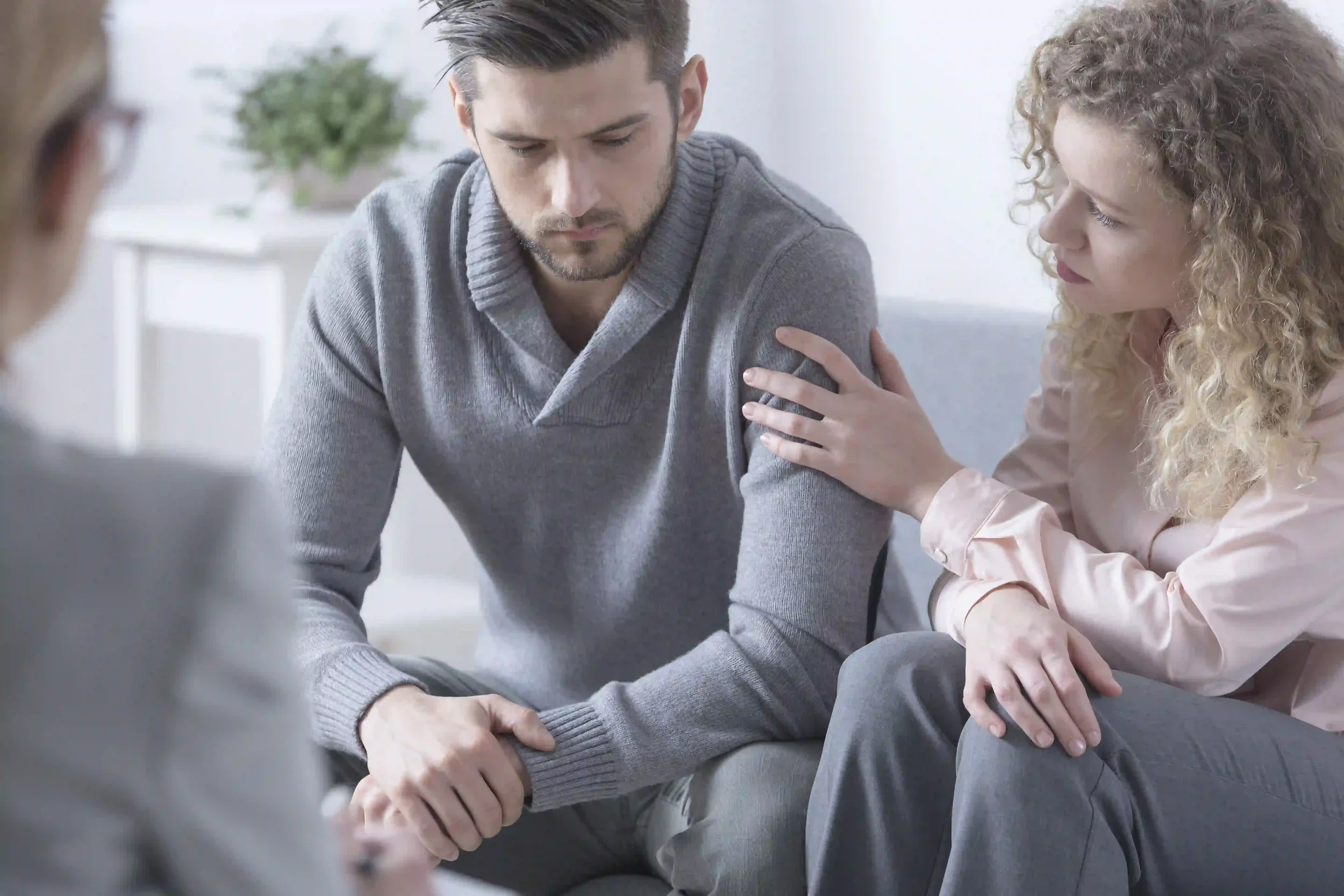
This is one reason trauma therapy and couples therapy can be so helpful. The goal is not to force you to act calm when you are overwhelmed. The goal is to understand the pattern underneath the reaction and help your system experience connection differently.
Approaches like EMDR therapy, Internal Family Systems, and other trauma-informed therapies can help address the root of these responses.
For many clients, especially those who have felt misunderstood in therapy before, it also matters that treatment is neurodivergent-affirming. Therapy should work with your brain, not against it.

Signs It May Be Time for Support
If your relationship feels stuck in the same painful loop, support can help.
Maybe one of you pursues and the other shuts down. Maybe small misunderstandings turn into hours of spiraling. Maybe intimacy feels difficult, trust feels fragile, or you keep blaming yourself for reactions you do not fully understand.
You do not need to wait until things are falling apart. In fact, getting support earlier can make healing feel less overwhelming. A good therapist will not reduce your relationship to communication tips if the real issue is a chronically activated nervous system.
At Courage to Heal Therapy, this work is approached with the belief that your protective patterns make sense.
Whether you are navigating trauma, burnout, ADHD, AuDHD, bipolar disorder, or relationship overwhelm, healing starts with understanding what your system has been trying to do for you.

When Both Partners Carry Trauma
Sometimes both people have trauma histories, and that can create a painful but understandable cycle.
One person withdraws to feel safe. The other reaches harder to feel safe. One needs space. The other experiences that space as abandonment. Neither person is trying to hurt the other, but both are reacting to old pain.
This kind of dynamic can improve, but it usually requires more than better wording. It requires slowing the cycle down enough for each person to see what is getting activated beneath the surface.
That is where compassion and accountability need to exist together. You can honor the impact of trauma while still taking responsibility for how you show up.
If this is your relationship, there is hope. Not the kind that depends on trying harder or walking on eggshells, but the kind that comes from finally understanding why the same moments keep hurting so much.
If love has felt confusing, exhausting, or harder than it seems to be for other people, that does not mean you are incapable of a healthy relationship. It may mean your nervous system has been carrying too much for too long, and with the right support, it can learn that closeness does not have to cost you your sense of safety.