Attachment Wounds in Adult Relationships
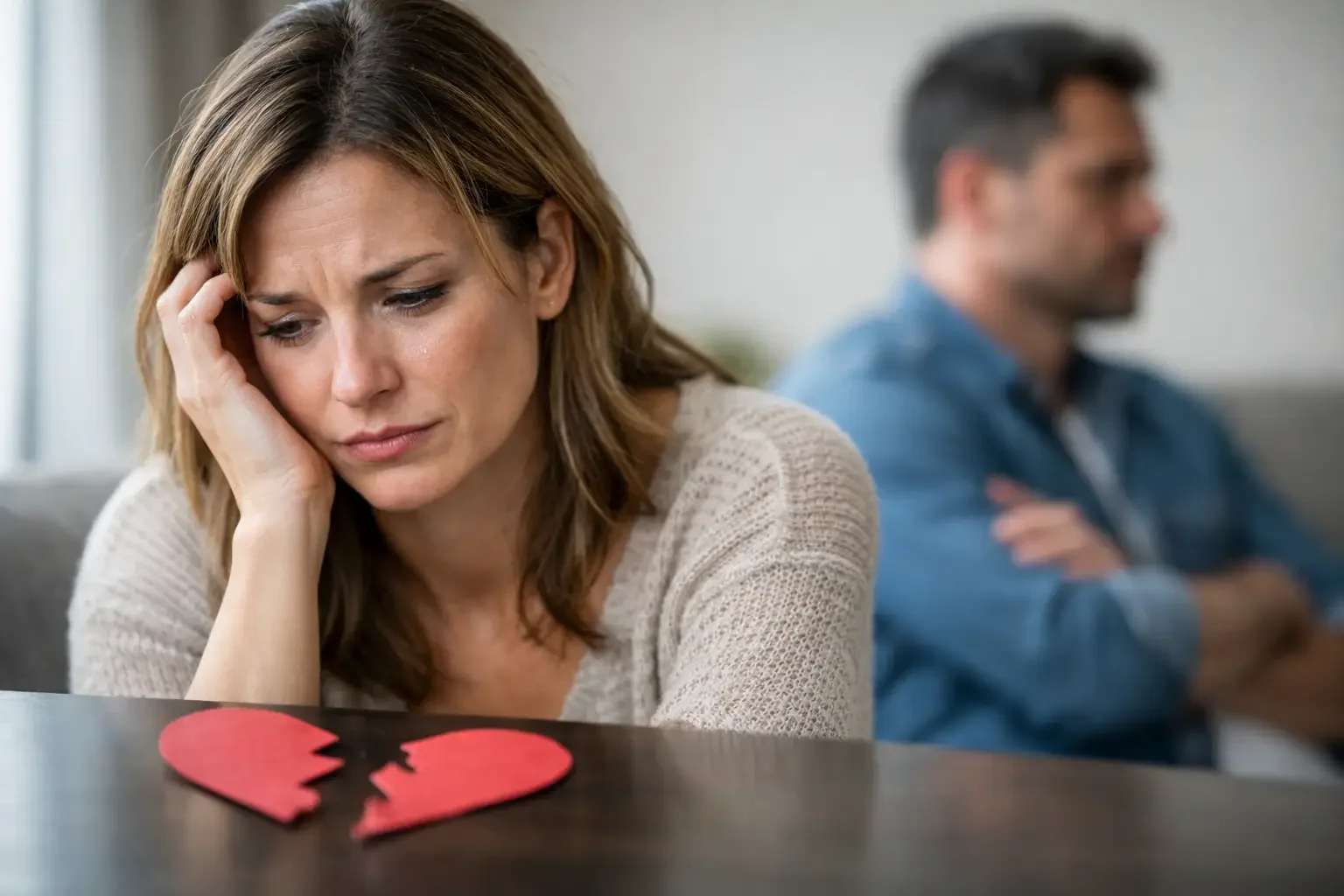
You can love your partner deeply and still feel panicked when they pull away, numb when conflict starts, or ashamed for needing reassurance at all.
Attachment wounds in adult relationships often show up exactly there - not as a lack of love, but as intense protective responses that take over when closeness stops feeling safe.
If this is your experience, you are not broken. Your reactions likely make sense in the context of what your nervous system has learned about connection, rejection, inconsistency, or emotional danger.
Many high-functioning women know how to keep going at work, care for everyone else, and look fine from the outside while privately feeling devastated by a delayed text, a tense conversation, or the sense that they are always too much or not enough.
What Attachment Wounds in Adult Relationships Can Look Like
Attachment wounds are the emotional injuries that form when important relationships feel unsafe, unpredictable, critical, neglectful, intrusive, or hard to rely on. They are not always caused by obvious trauma.
Sometimes they grow in quieter environments where love existed, but emotional attunement was inconsistent, needs were dismissed, or vulnerability did not feel welcome.
In adult relationships, these wounds often appear as patterns that seem confusing or disproportionate. You may overthink a small shift in tone for hours. You may shut down during conflict and then hate yourself for not being able to speak. You may people-please to keep the peace, then feel resentful and unseen. You may crave closeness and also feel suffocated by it.
Attachment wounds affect your attachment style.
For some people, attachment wounds create a constant fear of abandonment. For others, they create distance, numbness, irritability, or a strong need for control. Often it is both. Many adults move between longing for connection and protecting themselves from it.
This is especially important to name for neurodivergent women and couples. If you have ADHD, autism, AuDHD, or bipolar disorder, your nervous system may already process emotion, conflict, sensory input, and rejection differently.
That does not mean your attachment struggles are imaginary or that everything is explained by a diagnosis. It means your healing needs to account for how your brain and body actually work. Therapy should work with your brain, not against it.
Signs of Attachment Wounds in Adults
Attachment wounds do not always announce themselves clearly. They often hide inside habits and reactions that seem like personality traits, or like personal flaws you have given up trying to fix. If you recognize yourself in this list, that recognition is not a verdict. It is information.
Some common signs include:
Anxiety when a partner pulls away. A delayed reply, a distracted tone, or a request for space can set off a wave of panic that feels much bigger than the moment.
Shutting down during conflict. You go blank, lose your words, or feel like you have left your own body. Later, you replay everything you wish you had said.
People-pleasing to stay connected. You keep things easy and low-maintenance, then feel resentful that no one seems to notice what you actually need.
Overthinking small relational shifts. You scan tone, word choice, and timing for signs that something is wrong, sometimes for hours.
Difficulty asking for reassurance. Needing comfort feels embarrassing or risky, so you wait, hint, or test instead of asking directly.
Craving closeness and feeling suffocated by it. You want deep connection, but when it arrives, part of you wants to run.
Trouble trusting steadiness. Calm relationships can feel boring or suspicious, while chaotic ones feel familiar.
Harsh self-talk after conflict. You call yourself needy, too sensitive, or too much, long after the argument has ended.
A strong need for control or independence. Relying on someone feels dangerous, so you handle everything alone and call it strength.
You do not need to check every box for attachment wounds to be shaping your relationships. Even a few of these patterns, showing up again and again, can point to a nervous system that learned connection was not always safe.

Why Attachment Wounds Get Activated so Fast
When an attachment wound is touched, your body often reacts before your logical mind catches up. A partner forgetting something, sounding distracted, needing space, or offering feedback can land as danger rather than a simple relational moment.
The old story rises quickly: “I am too much. I am not important. I will be left. I have to fix this now. I should disappear.”
That speed can feel embarrassing, especially if part of you knows the reaction is bigger than the situation. But attachment responses are not chosen in the moment. They are protective patterns shaped by repetition.
If your system learned that connection was uncertain, conditional, overwhelming, or emotionally costly, it will try to prevent pain the best way it knows how.
For one person, that protection may look like pursuing - texting repeatedly, seeking reassurance, replaying every detail, trying to restore closeness immediately. For another, it may look like withdrawal - going quiet, becoming detached, minimizing feelings, or convincing yourself you do not need anyone.
Neither response means you are failing at relationships. Both are attempts to stay safe.

Common Patterns That Are Really Protective Responses
A lot of people describe themselves harshly before they understand the pattern underneath. They say, “I am needy. I am avoidant. I am too sensitive. I ruin relationships.”
Usually the more accurate story is that your system has learned survival strategies around closeness.
People-pleasing is one example. If being easy, helpful, or emotionally low-maintenance once kept you connected, your body may still reach for that strategy automatically.
Overthinking can function the same way. If scanning for changes helped you prepare for criticism, disappointment, or rupture, it makes sense that your mind now works overtime to detect risk.
Shutdown is also a protective response. Many women blame themselves for going blank in conflict, not being able to find words, or needing hours to recover after an argument. But shutdown is often a nervous system response to overwhelm, not indifference.
The same is true for irritability, defensiveness, or wanting to leave the conversation before it gets bigger.
The pattern is not the problem in a moral sense. The problem is that protective responses built for the past can create pain in the present.
They can pull you into cycles where you and your partner both feel misunderstood.
How Attachment Wounds Affect Couples
In couples, attachment wounds rarely stay contained inside one person. They create a loop.
One partner seeks connection urgently, the other feels pressured and pulls back. One partner shuts down to prevent escalation, the other experiences that shutdown as abandonment and pushes harder. Both people leave the interaction feeling alone.
This is where shame often takes over. You may start believing the relationship is doomed or that one of you is simply too damaged to make it work. But many couple conflicts are less about bad intentions and more about two nervous systems trying to protect themselves at the same time.
That does not mean every relationship can or should be saved. Some dynamics are genuinely harmful, coercive, or unsafe. Context matters. But in many caring relationships, the issue is not that love is missing. It is that old injuries are shaping present-day interpretation.
When couples begin to understand the attachment logic underneath the conflict, things often soften. The argument stops being about who is right and starts becoming about what each person’s system is bracing against.
Healing Attachment Wounds Without Shaming Yourself
Healing usually begins with recognition, not force. You do not heal attachment wounds by telling yourself to calm down, be less sensitive, or stop caring so much. You heal by getting curious about what your reactions are protecting, what cues set them off, and what safety actually feels like in your body.
That process can be deeply emotional because attachment wounds often live below words. Insight matters, but insight alone is not always enough. You may fully understand your pattern and still feel hijacked in real time. This is why trauma-informed therapy can be so helpful. Approaches that include nervous system awareness, parts work, and trauma processing can help you build change at the level where the pattern actually lives.
For some people, that means learning to notice activation sooner and respond with more choice. For others, it means grieving what they did not receive, practicing new relational experiences, or understanding the younger parts of themselves that still expect danger.
If you are neurodivergent, healing may also include reducing sensory overload, making communication more explicit, and honoring how recovery time, pacing, and emotional processing actually work for you.
There is no one perfect script for healing.
Some people need individual therapy first. Some benefit from couples therapy where both partners can slow the cycle down together. Some need to start with stabilization before processing deeper trauma.
It depends on your history, your relationship, and how much capacity your system has right now.

What Change Can Look Like
Healing attachment wounds in adult relationships does not mean you never get triggered again. It usually means the trigger becomes less consuming, less shame-filled, and less likely to run the whole interaction.
You start noticing, I am activated, instead of becoming the activation. You ask for reassurance more directly. You recover from conflict faster. You stop interpreting every hard moment as proof that love is gone.
You may also begin choosing different relationships altogether. As your nervous system learns that steadiness is possible, chaos can become less attractive. You become more able to recognize when a relationship is asking for vulnerability and repair versus when it is repeatedly reenacting harm.
At Courage to Heal Therapy, this kind of work is approached with compassion, depth, and respect for the protective strategies that helped you survive. The goal is not to make you less emotional or less attached. The goal is to help connection feel safer, clearer, and less ruled by old pain.
If this article feels uncomfortably familiar, try letting that recognition be information rather than evidence against you.
The ways you learned to protect yourself were adaptive for a reason. And with the right support, those patterns can begin to soften into something that feels a lot more like choice.