Does ADHD Get Worse with Menopause?
A quick note before we begin: for simplicity’s sake, when this article says "women," it means all AFAB (assigned female at birth) people. Hormones don't check your gender identity before they shift.
You used to be able to find your keys. You used to remember the name of the person you met five minutes ago. Now you walk into a room and forget why you came in. So, you sit there and wonder: does ADHD get worse with menopause, or is something else going on?
For most women, the answer is yes. ADHD symptoms tend to get worse during menopause, because the drop in estrogen affects the same brain chemistry that ADHD already strains.
But the longer answer is far more interesting. And it might explain a lot about the way your life has felt lately.
What Are the Symptoms of Perimenopause and Menopause?
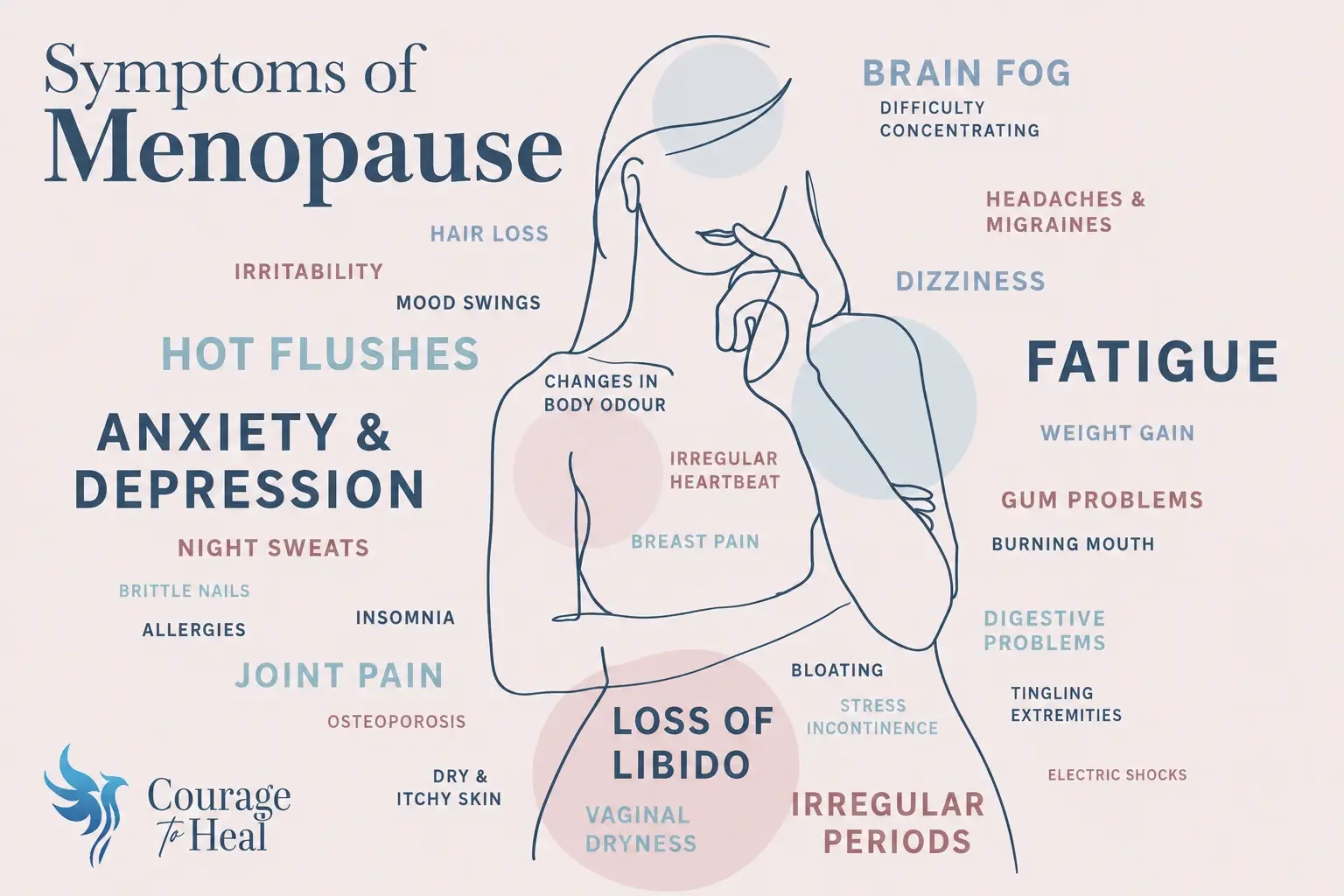
Menopause is so much more than hot flashes and missed periods. It touches almost every system in your body, sometimes in ways you would never connect to hormones. Some of the most common symptoms include:
Hot flushes and night sweats
Brain fog and trouble concentrating
Anxiety, depression, and mood swings
Fatigue and trouble sleeping
Irregular periods
Joint pain
Loss of libido
The graphic below maps out the full picture. (Fair warning: the list is long.)
The Menopause Timeline
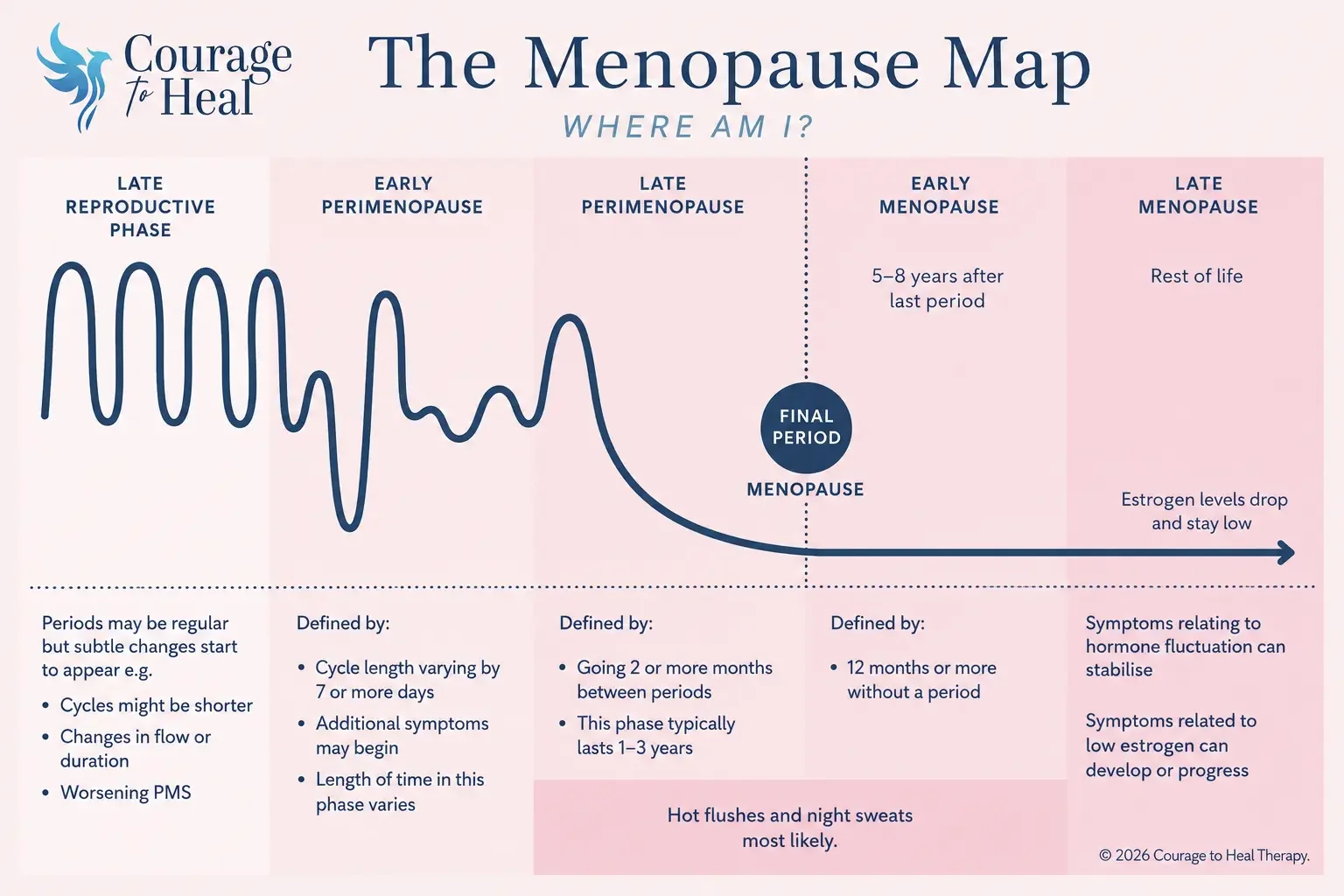
Menopause is not a single moment. It is a slow journey, and most women move through it in stages. It often starts quietly in the late reproductive phase, when periods are still regular but something feels slightly off.
From there, you move into early and then late perimenopause, when cycles get unpredictable and symptoms ramp up. Your final period marks menopause itself, and the years after that are early and then late menopause.
The map below shows where you might be on that road, and what tends to happen at each turn.
What Are ADHD Symptoms in Women?
ADHD looks very different in women than the hyperactive little boy most people still picture.
There are three subtypes: hyperactive, inattentive, and combined. Women are most likely to have the inattentive or combined type. (I go much deeper into this in my post ADHD in Women: Everything You Need to Know.)
That means you are more likely to be easily distracted, struggle to organize tasks, talk a lot, and blurt out answers before you mean to.
Common ADHD symptoms in women include:
Trouble focusing or finishing what you start
Disorganization and constantly losing things
Forgetfulness, even about important stuff
Restlessness or a wired, can't-settle feeling
Talking excessively
Difficulty managing emotions
Putting things off until the last possible second

When Does ADHD Peak in Women?
Here is the part that ties everything together. ADHD symptoms tend to follow your estrogen levels. When estrogen is high, your symptoms often ease up. When estrogen drops, they get worse.
This is a big part of why, for so many women, the answer to does ADHD get worse with menopause is a clear yes.
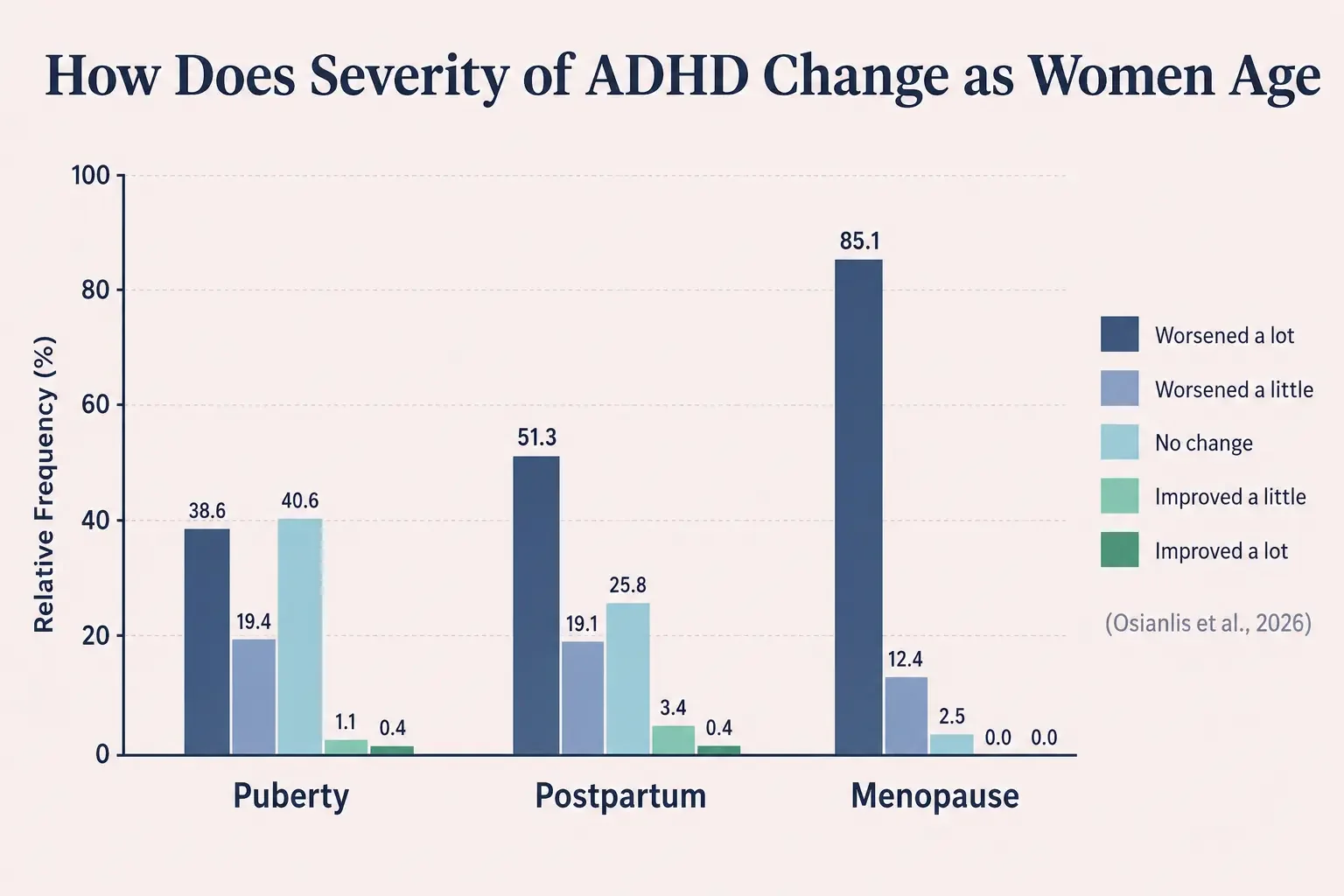
Puberty is the strange exception. Some girls report their ADHD getting worse during puberty, even though estrogen is rising in those years. This is likely because hormones swing wildly during that time, and because the demands at school and at home pile up fast right when a young brain is least equipped to handle them.
Now look back at the Menopause Map for a second. Every single time estrogen takes a dip, ADHD will peak in women.
That means you can expect your symptoms to be at their worst in early perimenopause, and then again starting in late perimenopause and continuing through menopause.
Declining estrogen also affects how your brain regulates dopamine, the very chemical that ADHD already runs short on. So every challenge gets louder.
This is exactly why some women receive their first ADHD diagnosis in perimenopause or menopause, after decades of quietly holding it all together.
The graphic below shows when women reported their ADHD symptoms getting worse across different stages of life. Menopause was, by a wide margin, the hardest.
Can Menopause Unmask ADHD?
To understand why ADHD can seem to appear out of nowhere, you have to understand masking.
Masking is all the work you do to hide your symptoms.
It looks like sitting on your hands so no one sees you fidget. It looks like staying quiet in a conversation so you don't overshare. It looks like becoming impressively organized at work or school, while your home life quietly falls apart behind closed doors.
ADHD is usually thought of as something you get diagnosed with in childhood. But for many women, the symptoms become much more noticeable, or even seem to emerge for the first time, during menopause.
Those hormonal shifts have a real and powerful effect on the brain, leading to more trouble with focus, memory, and emotional regulation. The mask you have worn for thirty years suddenly stops working.
There is another piece to this, and I love it. Women of all ages become expert maskers because of social pressure and the expectations placed on us. But menopause has a way of burning off a lot of that pressure.
Many women simply stop caring what other people think. So sometimes the unmasking is not just the hormones. Sometimes you put the mask down on purpose, because you are finally done performing.

Is Menopause Harder with ADHD?
Short answer: yes, much harder. Menopause is already a full plate. Add ADHD on top, and the two feed each other.
Look at where they overlap. Both menopause and ADHD list emotional overwhelm and trouble containing your feelings as core symptoms. So when you stack one on the other, that overwhelm does not just add up. It multiplies.
Picture it. You are lying in bed at 2 a.m., sweating through your shirt, fanning yourself with whatever is in reach. Your body will not cool down. And on top of that, your ADHD brain has decided this is the perfect moment to replay a conversation from 2009 and plan a grocery list you will forget by morning. Your thoughts are racing and your body is roasting. Sleep does not stand a chance.

Is It ADHD or Perimenopause Brain Fog?
This is where it gets genuinely confusing, even for professionals. ADHD and perimenopause symptoms overlap so much that they can be nearly impossible to tell apart.
Brain fog and weakened executive functioning show up in both, and both are driven by low estrogen. So, when your brain feels like wet cement, you honestly may not be able to say which one is the cause.
It helps to know the traits that point more specifically toward ADHD. These include:
Time blindness (losing all sense of how much time has passed)
Developmental coordination disorder, the clinical term for the poor motor coordination and clumsiness that often comes with ADHD
Rejection sensitive dysphoria (intense emotional pain from real or perceived rejection)
Disordered eating (with binge eating being the most prevalent)
Feeling a constant need to be busy
Perfectionism
Oversharing and talking excessively

Can Low Estrogen Make ADHD Worse?
By now the pattern should be impossible to miss. Lower estrogen makes ADHD symptoms worse. So, does ADHD get worse with menopause? Yes. And it gets worse every single time estrogen dips, not only during menopause.
That includes the luteal phase of your menstrual cycle. The luteal phase starts about two weeks before your period and ends when your period arrives, and estrogen falls during this window. Many women notice their brain fog and executive dysfunction spike right before their period for exactly this reason.
It also includes surgery. Women who have their ovaries removed experience a sudden, steep drop in estrogen. That drop can make ADHD symptoms noticeably worse, sometimes almost overnight.

What Is the Best ADHD Medication for Menopause?
I am a therapist, not a prescriber, so think of this as a starting point for a conversation with your doctor, not a prescription. That said, a few approaches show real promise for menopausal executive dysfunction.
Stimulants like lisdexamfetamine (Vyvanse)
Studies have shown that lisdexamfetamine significantly improves executive functioning, focus, and verbal memory in healthy menopausal women.
Non-stimulants like atomoxetine (Strattera)
These are also highly effective for the cognitive complaints that come with menopause, and they can be a great alternative for women who feel jittery, anxious, or wired on stimulants, or whose sleep suffers on them.
Hormone Replacement Therapy (HRT)
HRT is not an ADHD medication, but it restores some of that declining estrogen. It is a cornerstone treatment for classic menopause symptoms like hot flashes and night sweats, which wreck your sleep and drag your ADHD down with them.
The best approach often pairs ADHD treatment with hormonal support. Balancing your estrogen with HRT can lead to clearer thinking and help your ADHD medication work better than it would on its own.
A possible dosage adjustment
Many women find their usual ADHD medication stops working as well during perimenopause and menopause. If your old dose feels like it stopped pulling its weight, that is worth raising with your prescriber.

Therapy for ADHD in Menopause
Medication is only one piece. The right therapy can change the whole experience.
I have found that combining therapy designed to strengthen executive functioning with Internal Family Systems (IFS) therapy is a powerful pairing for ADHD.
The executive functioning work gives you concrete, practical strategies for managing your symptoms. The IFS work teaches you self-compassion, which matters more than most people realize. You get the toolbox and the kindness to use it without beating yourself up.
There is one more layer worth naming.
So many women with ADHD, especially those who were undiagnosed or diagnosed late, are carrying years of trauma. Not from one big event, but from a lifetime of being misunderstood, criticized, and shamed for being late, losing things, or making mistakes that came easily to everyone else.
That history leaves marks. It shows up as deep, sticky beliefs like "I'm clumsy" or "I'm stupid." EMDR therapy is wonderfully effective at treating this kind of trauma, helping you loosen those old beliefs and finally set them down.

You Were Never the Problem
If you have spent this whole article quietly recognizing yourself, take a breath. You are not falling apart, and you are not losing your mind. Your brain is responding to a real, measurable shift in your body, the same way it always has, just louder now.
For years, you may have been told you were too much, too scattered, too sensitive, too late. You were none of those things. You were a woman with an ADHD brain, navigating a world that never bothered to understand either one.
Menopause did not break you. It just turned the volume up on something that was always there, and in doing so, it handed you the truth. You can work with that truth. And you do not have to do it alone.